5 Bush Hogging Services for Rural Estates That Save Time
Last Updated: October 31, 2026
Quick Summary
Bush hogging is rough-cut mowing of tall grass, weeds, and light brush with a tractor-mounted rotary cutter, and most rural estates need it two to three times a year during the growing season. Active pastures need more frequent cuts, while idle acreage can sometimes get by with one annual cut to keep brush from taking over.
A rotary cutter slices through thick vegetation and saplings that would destroy a finish mower.
The first cut on long-idle land costs more because the equipment works slower and may need more than one pass.
Bush hogging leaves roots and soil in place, while land clearing removes trees, stumps, and root systems entirely.
Cutting too low on thin or sloping soil invites erosion, while cutting too high lets woody brush survive and thicken.
Avoid cutting during nesting season and check for ground nests, fawns, and burrows before a pass.
Table of Contents
Bush Hogging Services for Rural Estates: What the Work Covers
Bush hogging is the practice of cutting tall grass, weeds, and light brush on open land with a tractor-mounted rotary cutter. Readers who want more context on the company's services and expertise can browse the blog for related articles.

A rotary cutter is built for rough-cut mowing, not a manicured lawn finish. It slices through thick vegetation, saplings, and rough terrain that would destroy a finish mower in minutes.
Most rural estates need the same core services:
Rough-cut mowing of overgrown fields and pasture
Brush removal along fence lines and property edges
Cutting small trees and saplings before they take hold
Bush hogging is as much about access as horsepower. If a gate is too narrow or a ditch too soft, the equipment may not reach the back of the property.
Brush Cutting for Overgrown Land: Reclaiming Fields and Fence Lines
Overgrown land rarely happens overnight.
Brush cutting reverses that. A commercial-grade rotary cutter takes down tall grass and unwanted brush in a single pass, opening up land that had become unusable.
Fence lines deserve special attention.
A common mistake is waiting until brush is chest-high. Cutting early keeps saplings from hardening into small trees that need a different tool entirely.
Bush Hogging Cost per Acre: What Drives Your Estimate
There's no single bush hogging cost per acre, because the price depends on the land, not a flat rate. Two ten-acre parcels can carry very different quotes. What most service pages won't tell you is how to build your own estimate before anyone shows up, so you can compare bids on equal terms instead of on the headline number.
Here's what generally moves the number:
Vegetation density, light grass cuts faster than thick brush and saplings
Terrain conditions, slopes, wet spots, and rocks slow the work
Equipment access, narrow gates and soft ground add setup time
Build a Rough Estimate Before You Call
A practical framework is to think in three buckets: base cutting, difficulty adders, and extras. Base cutting scales with acreage and reflects how long the tractor and rotary cutter will run. Difficulty adders cover slope, density, obstacles, and access. Extras are cleanup, haul-off, and follow-up passes.
A common pattern is that the first cut on long-idle land costs more than routine maintenance cuts, because the equipment works slower and may need more than one pass. A reclaiming job on long-idle land generally requires more passes than routine maintenance, which affects the quote.
Pro Tip When you request quotes, give the provider acreage, a photo of the thickest area, gate width, and whether the ground is wet. Accurate inputs produce tighter estimates and fewer surprise charges.
What to Ask Before You Compare Numbers
Pricing generally depends on the on-site conditions of the property. Current prices and quotes are available on the LAND WORX WNC website. Compare quotes on what's included, not just the headline number, and ask whether cleanup is part of the job.
Questions that separate a real quote from a guess:
Is the price per acre, per hour, or a flat job rate?
Does it include a second pass if regrowth or thick spots need it?
Is cut brush left in place, piled, or hauled off?
A quote that answers those in writing is worth more than a lower number that leaves them open.
Bush Hogging vs. Land Clearing: Choosing the Right Level of Work
Bush hogging and land clearing are not the same job, and choosing wrong wastes money.
The U.S. Department of Agriculture's Natural Resources Conservation Service treats brush management as an ongoing land maintenance practice rather than a one-time removal, which is the right way to think about bush hogging.
Use this to decide:
Your Situation | Right Level of Work |
Pasture or field grown tall, still usable | Bush hogging |
Fence lines and edges choked with brush | Brush cutting |
Saplings and light trees only | Bush hogging with sapling cutting |
Stumps, dense trees, building site prep | Land clearing |
One-time cleanup before sale | Assess first, then choose |
If your project needs more than mowing, our full range of property services in Western NC covers land clearing, site cleanup, and material delivery.
Bush Hogging Frequency: How Often a Rural Estate Needs Cutting
Most rural estates need bush hogging two to three times a year during the growing season. Active pastures often need more; idle acreage can sometimes get by with one annual cut to keep brush from taking over. But frequency isn't just a calendar question. The right schedule depends on what you want the land to do, how tall you let it get, and when you cut relative to the season.
Bush hogging frequency depends on how the land is used:
Working pasture, cut more often to keep forage healthy and weeds down
Idle fields, one or two cuts a year to hold back saplings
Fence lines and edges, once a year, before brush hides damage
Match Cutting Height to the Land's Job
Cutting height is the lever most owners never touch. A rotary cutter can be set to leave taller stubble or to scalp closer to the ground, and the setting changes both the result and the schedule.
Pasture and hay ground usually do best with a moderate height that leaves enough leaf area for regrowth and keeps soil covered.
Idle fields and edges can be cut lower to knock back saplings and woody stems before they harden.
Reclaimed ground often needs a first low pass to expose stumps and debris, then a higher maintenance cut once the rough work is done.
A common pattern is that cutting too low on thin or sloping soil invites erosion and bare spots, while cutting too high lets woody brush survive and thicken.
Time the Cuts to the Season
Seasonal timing matters as much as the number of cuts. Late-spring and early-summer cuts catch growth before it seeds and before saplings harden. A late-season cut cleans up regrowth and reduces the winter fuel load around fences and structures. Cutting the same field at the same point every year can favor the same weeds, so varying the timing slightly helps keep vegetation from adapting.
Watch Out Avoid cutting during nesting season if you manage wildlife habitat, and check for ground nests, fawns, and burrows before a pass. A quick walk of the field protects both wildlife and equipment.
The USDA NRCS notes that consistent management keeps unwanted vegetation from reestablishing, which is why a schedule beats a single rescue cut. Letting brush go for years costs more to fix than staying on a routine.
Key Takeaway Plan the year in three passes: an early-season cut to control growth, a mid-season cut on working ground, and a late-season cleanup on edges and idle fields. Adjust height and timing to what each area is used for.
Schedule Your Bush Hogging Service and Reclaim Your Acreage
Overgrown acreage doesn't fix itself, and every season you wait, the brush gets thicker and the job gets bigger. A scheduled cut keeps fields usable, fence lines visible, and your property under control instead of playing catch-up.
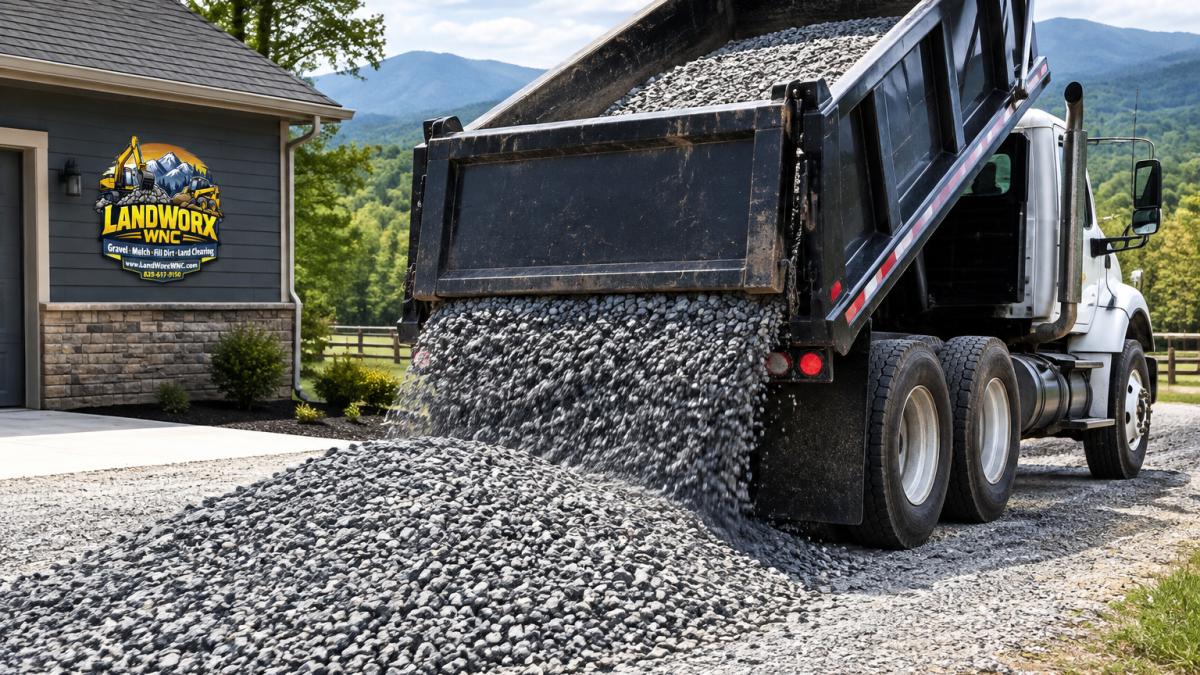
LAND WORX WNC provides professional property services across Western North Carolina, backed by 5-star local excavation and property service reviews. And because rural estates often come with long driveways and unpaved lanes, we also handle gravel road repair and gravel delivery services in Western North Carolina, Jackson, Macon, Swain and Haywood when the access road needs attention alongside the fields.
Ready to reclaim your land? Contact Land Worx for a quote, or call 828-617-9150.
Frequently Asked Questions
What does bush hogging include?
Bush hogging is rough-cut mowing with a tractor-mounted rotary cutter. It knocks down tall grass, thick vegetation, weeds, and saplings across open fields, pastures, and fence lines. A professional service typically includes an on-site assessment, cutting at the right height for your vegetation density, and cleanup of the cleared area. It does not remove roots or grade soil; those tasks belong to land clearing. For overgrown lots and acreage, bush hogging is usually the first step to make the land usable again.
How much does bush hogging cost per acre?
Bush hogging cost per acre depends on vegetation density, terrain conditions, acreage size, and equipment access. Properties with thick brush, saplings, or rough terrain take more time and heavier equipment, which affects the quote. Fence lines and tight spaces also slow the work. Rather than publish a flat rate, most providers give a free estimate after an on-site assessment. Ask for a written quote that lists what is included so you can compare offers fairly.
How often should a rural property be bush hogged?
Most rural estates need bush hogging once or twice a year to keep fields and pastures from turning into brush. Fast-growing vegetation in warm, wet seasons may need a second pass. If you are reclaiming overgrown land, an initial cut followed by a second cut a few weeks later knocks back regrowth. After that, a regular schedule keeps the property manageable. Your bush hogging frequency should match how you use the land and how quickly vegetation returns.
What is the difference between bush hogging and land clearing?
Bush hogging cuts vegetation above the ground, leaving roots and topsoil in place. Land clearing removes trees, stumps, roots, and brush entirely, often with excavation equipment. Choose bush hogging for pasture upkeep, overgrown fields, and fence lines that just need cutting. Choose land clearing when you need to prepare a building site, install a driveway, or remove woody growth for good. Many properties start with bush hogging and move to land clearing only where construction or access requires it.
Your acreage won't wait, and neither should the brush. LAND WORX WNC brings commercial-grade equipment, free on-site assessments, and a clear quote before the tractor ever leaves the yard. Get started with LAND WORX WNC and turn overgrown fields back into usable land.

Comments