How to Clear Brush on a Steep Property Safely
Last Updated: November 8, 2026
Quick Summary
To clear brush safely on a steep property, first assess the slope and mark the clearing area, then work from the top down using hand tools or specialized equipment matched to the grade. Wheeled machines are a rollover risk on steep ground, so only use them where the slope allows.
Never work below a cut slope or dead tree, and keep a clear escape route.
Use hand tools as the default on steep, wet, or rocky ground.
Operate wheeled machines only on gentle, uniform slopes, never across a side slope.
Work top down in small blocks, leaving strips of vegetation to slow runoff.
Seed or mulch bare ground before the next heavy rain.
Table of Contents
Assess the Slope and Plan the Clearing Area
Walk the site to spot drop-offs, loose rock, stumps, and creek banks, then flag the clearing area. Never work below a cut slope or dead tree; start at the top and work down with a clear escape route to safely clear brush.
Choose Steep Hillside Brush Clearing Equipment
Match equipment to slope first. Compare land clearing contractors in Haywood County if you would rather hire out the clearing work. Sustained steep grades call for hand tools or specialized machines, and walk-behind and ride-on equipment becomes a rollover risk on steep ground.
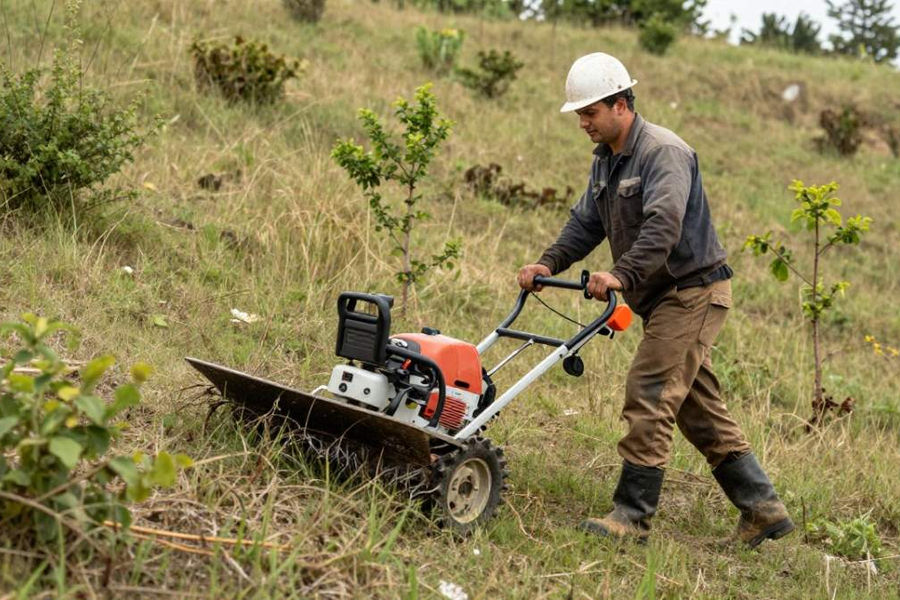
Hand tools, the default on steep, wet, or rocky ground
Loppers and bypass pruners: Stems up to about 1 inch.
Pruning saw: Saplings and limbs up to roughly 4 inches.
Brush hook or machete: Light stems and vines with a clear swing zone.
Clearing saw (blade trimmer): The workhorse for dense thickets on ground too steep for a wheeled machine; use a metal brush blade, not string. If you are weighing equipment against a service, see bush hogging services for rural estates that save time.
Walk-behind and wheeled machines, only where the slope allows
Walk-behind brush cutter: Work straight up and down in short passes; on side slopes it can slide or tip.
Ride-on brush mower or compact tractor: Only on gentle, uniform slopes; check the rated maximum slope.
Skid-steer with a forestry mulcher: Fast but top-heavy; use it only on terrain the machine is rated for.
Never operate a wheeled or tracked machine across a side slope or straight down a steep face, runaways and rollovers cause the most serious injuries here.
Traction, tethering, and stability
Track machines and bar-tread tires generally hold better than turf tires on rough ground, but traction is lost on wet clay or loose gravel. On marginal slopes, a rated tether or winch anchored to a sound tree uphill can prevent a runaway.
Safety gear for steep ground
Wear eye and hearing protection, cut-resistant gloves, lugged boots, and a hard hat with a face shield for overhead growth. Add logger-style chaps for chainsaw work, and carry a first-aid kit and a way to call for help, cell coverage is often poor on wooded slopes.
If the slope or brush density is beyond what you can safely handle, bring in a contractor rather than pushing a machine past its limits. Access roads are often needed before heavy equipment can reach a steep site safely; Gravel Road Repair covers the gravel road work involved.
The article matches equipment to slope, with hand tools as the default on steep, wet, or rocky ground.
Equipment | Best for | Key limit |
Loppers and bypass pruners | Stems up to about 1 inch | Hand tool only |
Pruning saw | Saplings and limbs up to roughly 4 inches | Hand tool only |
Brush hook or machete | Light stems and vines | Needs a clear swing zone |
Clearing saw (blade trimmer) | Dense thickets on too-steep ground | Use metal brush blade, not string |
Walk-behind brush cutter | Short up-and-down passes | Can slide or tip on side slopes |
Ride-on brush mower or compact tractor | Gentle, uniform slopes | Check rated maximum slope |
Skid-steer with forestry mulcher | Terrain the machine is rated for | Fast but top-heavy |
Prevent Erosion and Cost Out the Job Per Acre
Clearing a steep slope speeds runoff and starts soil moving once roots and ground cover are gone. Plan for erosion before you clear brush, not after the first heavy rain.
A clearing sequence that protects the slope
Inspect and mark. Flag the work area, creek edges, property lines, utility lines, and wet ground.
Plan access. Decide how people, tools, and debris move without creating new channels.
Cut in stages. Work top down in small blocks, leaving strips of undisturbed vegetation to slow runoff.
Keep roots and stumps where you can. Leave them and cut flush rather than grinding.
Handle debris on site. Chip or scatter cut brush as light mulch.
Stabilize bare ground. Seed or mulch before the next heavy rain, and use water bars, silt fence, or straw wattles.
Recheck after storms. Fix rills, washed-out mulch, or blocked drainage before they grow.
Do not clear vegetation along a creek bank or drainage swale without checking local rules, many jurisdictions restrict work near waterways, and removing bank vegetation can destabilize the slope.
Disposal and fire rules
Chipping: Best on most steep properties, chip on site and spread or stockpile.
Hauling: Expensive per load; get a written per-load price first.
Burning: Check burn bans, permits, and setbacks; never burn on a windy day or where fire can climb.
Composting: Fine for light brush, but dense piles harbor pests and fuel fire.
What drives the cost
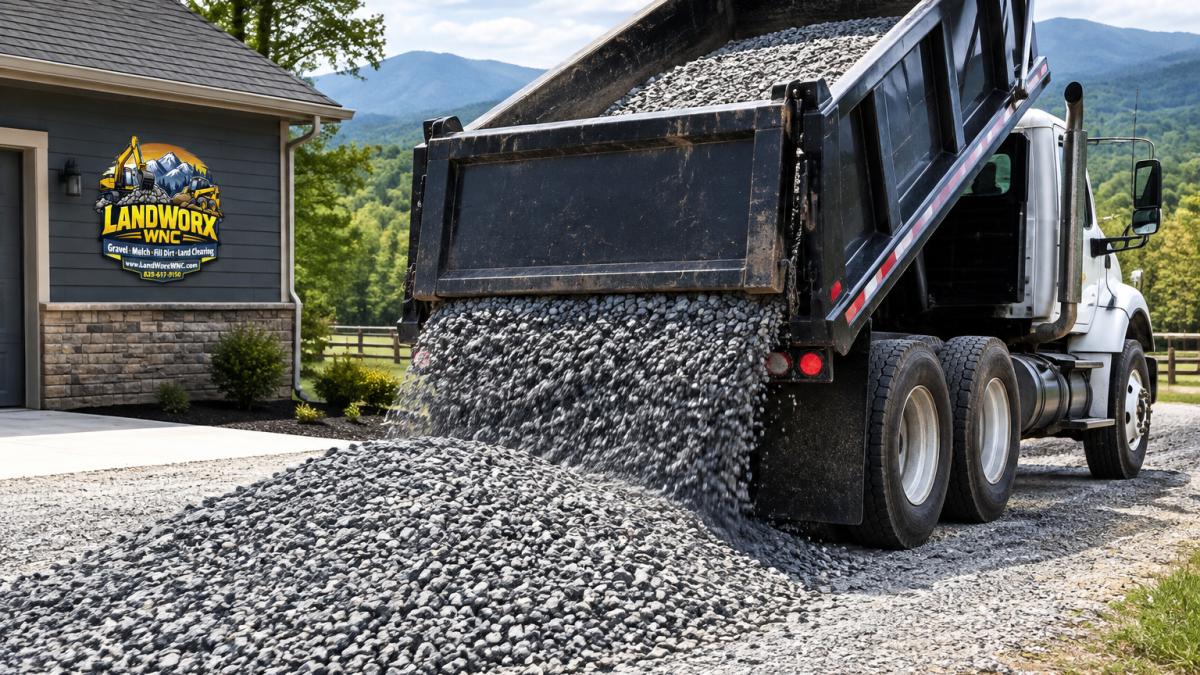
Pricing depends on acreage, slope, brush density, access, distance to disposal, and haul volume. Ask for a written quote separating clearing, debris handling, and erosion control. If you need fill or surfacing material for stabilized access after clearing, gravel delivery in Western North Carolina, including Jackson, Macon, Swain, and Haywood counties, is available; pricing depends on quantity, dates, and delivery.
When to hire a contractor
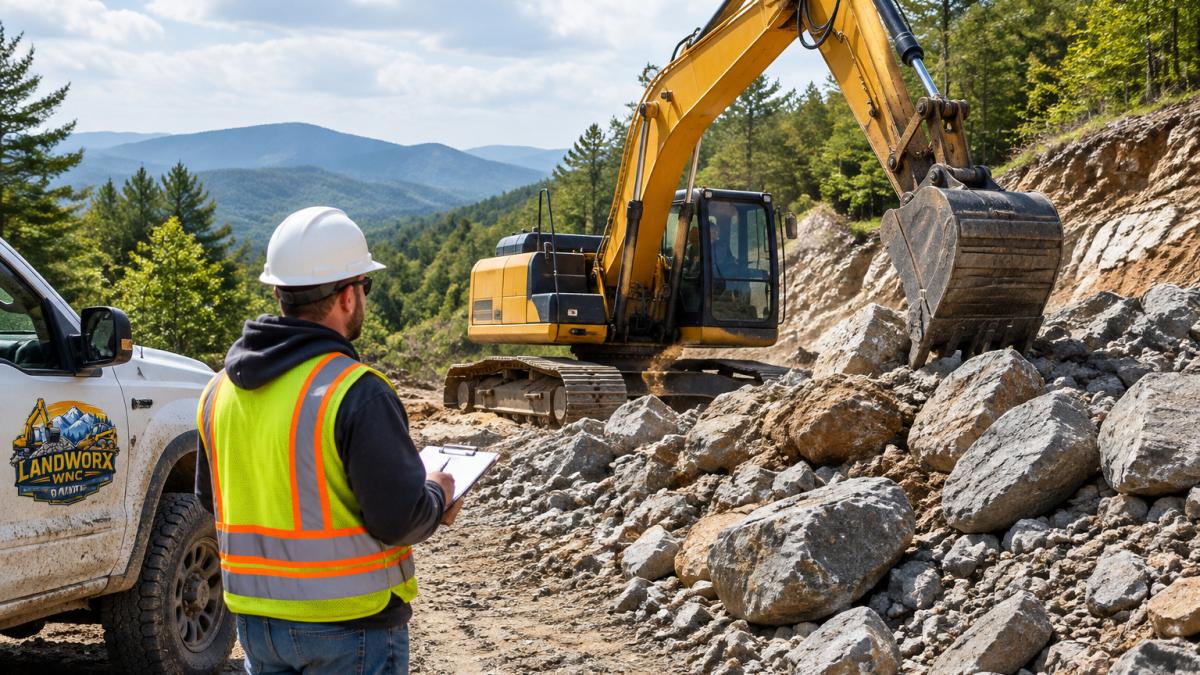
Hire a professional when the slope exceeds safe footwork, brush is too dense for hand tools, work is near utilities, waterways, or structures, or acreage is too large. For current prices or a per-acre quote, contact LAND WORX WNC directly. Contact our team to request a free estimate for your property.
If a steep gravel driveway washes out after rain, fix a steep gravel driveway with the right grading and drainage. For runoff across the property, managing drainage on mountain properties explains how to direct water safely.
Frequently Asked Questions
How can I clear brush on a steep hill safely?
Start by assessing the slope and marking the clearing area before any cutting. Work from the top down with hand loppers and a pole saw for anything near the edge, and keep your footing on firm ground. Avoid running a machine across slopes steeper than the equipment manufacturer allows, and never work alone. If the slope is too steep to stand on safely, a professional with a tracked or mulching machine is the safer choice. Plan a clearing sequence that leaves stabilizing vegetation in place on the steepest sections.
How much does it cost to clear brush per acre?
Pricing depends on how dense the brush is, how steep the ground is, how much material must be removed or disposed of, and how far equipment has to travel. LAND WORX WNC does not publish flat per-acre rates because each property is different. For current pricing or a quote, visit the company website or request a site assessment. Getting an on-site estimate lets you compare the scope of work directly, rather than relying on a general per-acre figure.
How do you prevent erosion after clearing a hillside?
Clearing removes the roots and ground cover that hold soil in place, so act quickly. Keep disturbed areas as small as practical, leave mulch or chipped material on exposed soil, and seed or plant ground cover as soon as possible. Direct runoff away from bare slopes with water bars or diversion ditches, and check drainage after heavy rain. Gravel or stabilized surfaces on driveways and access roads also help control washout on steep grades.

Comments